
Le paysage de la recherche scientifique au Canada se tourne de plus en plus vers de nouveaux composés présentant un potentiel thérapeutique important. Parmi ceux-ci, chlorhydrate d'ibogaïne (HCL) L'iboga présente un intérêt majeur, notamment dans les domaines de la recherche en neurosciences et en toxicomanie. Son profil pharmacologique unique, issu de la plante Tabernanthe iboga, ouvre des perspectives prometteuses pour explorer des approches novatrices en matière de santé mentale et de troubles liés à l'usage de substances.
Pour les chercheurs canadiens, il est primordial de comprendre les subtilités de l'approvisionnement, de la conformité réglementaire et des différentes formes chimiques de l'ibogaïne. Ce guide propose une exploration approfondie, visant à doter les institutions et les chercheurs individuels des connaissances nécessaires à la réalisation de leurs recherches. des études rigoureuses et éthiquement saines, contribuant ainsi à la réputation grandissante du Canada dans le domaine des sciences psychédéliques et enthéogènes.
L’ibogaïne HCL dans le renouveau de la recherche au Canada : explorer son potentiel thérapeutique
Contexte historique et regain d'intérêt scientifique
Le parcours de l'ibogaïne, des pratiques spirituelles traditionnelles d'Afrique de l'Ouest à la pointe de la recherche scientifique moderne, s'étend sur plusieurs décennies. Historiquement vénéré pour ses prétendues propriétés spirituelles et curatives, cet alcaloïde a acquis une notoriété confidentielle au milieu du XXe siècle pour son potentiel à interrompre la dépendance aux drogues. Ces premiers témoignages, largement anecdotiques, ont suscité un intérêt de niche qui, ces dernières années, s'est transformé en un véritable engouement pour l'ibogaïne. regain d'intérêt pour la science. Aujourd'hui, les chercheurs étudient minutieusement les mécanismes, l'efficacité et le profil de sécurité de l'ibogaïne, dans le but de valider ses applications thérapeutiques dans des conditions de laboratoire contrôlées, notamment dans le domaine de la toxicomanie et de la santé mentale.
La promesse unique de l'ibogaïne HCL pour les chercheurs canadiens
L'ibogaïne HCL, forme saline isolée et purifiée du principal alcaloïde de l'iboga, offre des avantages spécifiques pour la recherche scientifique. Sa stabilité chimique garantit dosage précis et résultats expérimentaux reproductibles, Ces données sont essentielles à une recherche rigoureuse. Des institutions canadiennes explorent son potentiel dans plusieurs domaines cruciaux, notamment sa capacité avérée à atténuer les symptômes de sevrage, à réduire les envies de diverses substances et à induire des changements neuroplastiques susceptibles de favoriser un rétablissement durable. Les chercheurs étudient également son impact sur les systèmes de récepteurs, en explorant ses interactions complexes avec les transporteurs NMDA, kappa-opioïdes et de sérotonine.
Par exemple, une étude hypothétique menée dans une université canadienne pourrait comparer les effets neurogènes du chlorhydrate d'ibogaïne à ceux d'un placebo chez des modèles animaux de dépendance aux opioïdes, en mesurant précisément les modifications de la connectivité neuronale et les effets comportementaux. La disponibilité de chlorhydrate d'ibogaïne de haute pureté est essentielle pour de telles études, afin de garantir que les effets observés soient attribuables au composé lui-même et non à des contaminants ou à des profils d'alcaloïdes variables. Ces recherches ciblées contribuent de manière significative à la compréhension globale du potentiel thérapeutique de l'ibogaïne et de son rôle dans le développement de futurs traitements contre la toxicomanie.
Déconstruction du chlorhydrate d'ibogaïne : profil chimique et normes de pureté pour les applications scientifiques
Comprendre la structure et les mécanismes d'action des alcaloïdes
Le chlorhydrate d'ibogaïne est un alcaloïde indolique, plus précisément le chlorhydrate de (–)-12-méthoxyibogamine, présentant une structure polycyclique complexe. Ses effets psychoactifs et thérapeutiques sont médiés par diverses cibles pharmacologiques. Les chercheurs ont identifié son activité comme étant celle d'un antagoniste du récepteur NMDA, L'ibogaïne interagit notamment avec un inhibiteur du transporteur de la sérotonine et un agoniste des récepteurs kappa-opioïdes. Elle est métabolisée dans le foie en noribogaïne, un métabolite à action prolongée qui contribuerait significativement à l'élargissement de sa fenêtre thérapeutique, en particulier dans la réduction des envies. Comprendre cette interaction complexe de mécanismes est essentiel pour interpréter les résultats de la recherche et anticiper les applications cliniques potentielles.
L'impératif d'une pureté élevée pour des résultats de recherche reproductibles
Pour toute recherche scientifique impliquant des composés psychoactifs, le pureté du matériel de recherche L'utilisation d'ibogaïne HCL de haute pureté est non négociable. Sa pureté, généralement vérifiée par des techniques analytiques avancées telles que la chromatographie liquide à haute performance (HPLC) et la chromatographie en phase gazeuse couplée à la spectrométrie de masse (GC-MS), garantit la fiabilité et la reproductibilité des résultats expérimentaux, ainsi que leur attribution directe au composé étudié. Les impuretés, même à l'état de traces, peuvent introduire des variables parasites, modifier les profils pharmacologiques, voire induire une toxicité inattendue, compromettant ainsi l'intégrité et la sécurité de la recherche. Les chercheurs souhaitant utiliser des composés de haute qualité trouveront des informations plus détaillées sur l'évaluation de la qualité des matériaux à l'adresse suivante : [insérer l'adresse ici]. Puissance et pureté de l'ibogaïne HCL pour les études scientifiques.
Par exemple, si une étude vise à déterminer la courbe dose-réponse précise de l'effet du chlorhydrate d'ibogaïne sur la recapture de la sérotonine, la présence d'une impureté de 1%, un autre alcaloïde ayant une activité sérotoninergique, pourrait fausser considérablement les résultats et conduire à des conclusions erronées. Par conséquent, s'approvisionner en chlorhydrate d'ibogaïne auprès de fournisseurs qui fournissent des certificats d'analyse complets détaillant les niveaux de pureté et l'absence de contaminants est un critère essentiel d'une pratique scientifique responsable. Cet engagement envers la pureté garantit la validité de tous les résultats ultérieurs.
S’orienter dans le paysage réglementaire canadien de l’ibogaïne de qualité recherche
État et implications de la Liste des médicaments d’ordonnance (LMO) de Santé Canada
Au Canada, l'ibogaïne n'est pas classée comme substance contrôlée en vertu de la Loi réglementant certaines drogues et autres substances (LRCDS); toutefois, elle figure sur la liste de Santé Canada. Liste des médicaments sur ordonnance (PDL). Cela signifie que l'ibogaïne est considérée comme un médicament sur ordonnance et ne peut être obtenue légalement pour un usage humain que sur présentation d'une ordonnance valide délivrée par un professionnel de la santé autorisé. À des fins de recherche, cela implique que toute étude impliquant l'administration d'ibogaïne à des humains doit respecter des protocoles rigoureux, nécessitant souvent des approbations dans le cadre du Programme d'accès spécial (PAS) ou d'un essai clinique approuvé par Santé Canada. Les laboratoires menant des études sur l'ibogaïne doivent respecter ces protocoles. in vitro Les études sur les animaux doivent également veiller à ce que leurs pratiques d'approvisionnement et de stockage soient conformes aux réglementations fédérales et provinciales pertinentes régissant les produits chimiques de recherche, en mettant l'accent sur l'approvisionnement éthique et la documentation.
Distinction entre les composés de recherche et les substances contrôlées en vertu de la Loi réglementant certaines drogues et autres substances (LRDS).
La distinction entre les substances inscrites sur la Liste des substances contrôlées (LSC) et celles inscrites à la Loi réglementant certaines drogues et autres substances (LRDS) est cruciale pour les chercheurs canadiens. Alors que des substances comme la psilocybine, le DMT et la mescaline sont classées à l'annexe III (ou supérieure) de la LRDS, imposant des restrictions strictes à leur possession, leur production et leur distribution, le statut de l'ibogaïne sur la LSC exige un cadre de conformité différent. Les chercheurs doivent comprendre que, même si la possession personnelle sans ordonnance est généralement interdite pour un usage humain, la recherche légitime menée sous la supervision institutionnelle appropriée et avec l'approbation de Santé Canada est autorisée. Cela implique l'obtention des permis nécessaires à l'importation et à la recherche, ainsi que la tenue de registres méticuleux concernant l'acquisition, l'entreposage et l'élimination de tous les composés de qualité recherche. Le respect de ces lignes directrices est primordial pour maintenir une position éthique et juridique au sein de la communauté scientifique canadienne et garantir le respect des ratios d'alcaloïdes de l'ibogaïne PTA/TA pour les études canadiennes..
Adapter votre choix à des objectifs de recherche spécifiques
Le choix entre HCL, TA et PTA dépend essentiellement des objectifs spécifiques de la recherche. Pour les études exigeant une grande précision, telles que le profilage pharmacocinétique, les essais de liaison aux récepteurs ou les études de relations structure-activité (RSA), L'ibogaïne HCL est le choix privilégié Grâce à sa pureté constante et à sa composition monocomposante, l'ibogaïne peut être isolée par les chercheurs, sans être influencée par d'autres alcaloïdes végétaux.
À l'inverse, si une étude vise à explorer les effets synergiques du spectre complet des alcaloïdes, par exemple en reproduisant une expérience plus traditionnelle ou ethnobotanique, les formes TA ou PTA seraient plus appropriées. Par exemple, une équipe de recherche pourrait comparer les effets neurotrophiques de l'ibogaïne HCL purifiée à ceux d'un extrait PTA chez un modèle animal, en supposant que le spectre plus large d'alcaloïdes présent dans le PTA pourrait induire des réponses biologiques différentes ou plus durables. Comprendre ces différences et adapter le choix du composé à la question de recherche est crucial pour obtenir des résultats scientifiques valides et pertinents. Une documentation exhaustive de la forme spécifique et de son profil alcaloïde est toujours essentielle à la transparence scientifique.
Formes de l'ibogaïne : chlorhydrate (HCL), alcaloïdes totaux (AT) et alcaloïdes totaux purs (ATP) expliquées aux chercheurs
Pour les chercheurs travaillant avec l'ibogaïne, il est fondamental de comprendre les différentes formes du produit : chlorhydrate d'ibogaïne (HCL), alcaloïde total (TA) et alcaloïde total pur (PTA). Chaque forme présente des caractéristiques uniques en termes de pureté, de composition et d'applications potentielles en recherche, le choix dépendant donc de la question scientifique spécifique abordée.
Chlorhydrate d'ibogaïne (HCL)
L'ibogaïne HCL est la forme la plus raffinée et la plus pure d'ibogaïne disponible pour la recherche. Il s'agit d'un sel de l'alcaloïde ibogaïne, généralement isolé et purifié à un degré élevé (souvent 98% ou supérieur). Sa principale caractéristique est sa pureté constante, ce qui signifie que les chercheurs travaillent avec un composé unique et bien défini. Cela rend l'ibogaïne HCL idéale pour les études nécessitant un dosage précis et l'isolement des effets pharmacologiques spécifiques de l'ibogaïne, telles que les études pharmacocinétiques, les tests de liaison aux récepteurs ou les recherches sur des voies moléculaires spécifiques. La nature prévisible du HCL minimise les variables, permettant une interprétation claire des résultats directement attribuables à la molécule d'ibogaïne.
Extrait d'alcaloïdes totaux (TA)
L'extrait d'alcaloïdes totaux (AT) est une forme moins raffinée, dérivée directement de l'écorce de la racine de la plante. Tabernanthe iboga Contrairement à l'acide chlorhydrique (HCl), l'extrait de TA contient un spectre complet d'alcaloïdes présents dans la plante, notamment l'ibogaïne, la coronaridine, la vocangine, l'ibogaline et d'autres alcaloïdes indoliques mineurs. La pureté de l'ibogaïne dans un extrait de TA peut varier considérablement, généralement de 20% à 45%, le reste étant composé d'autres alcaloïdes, de cires et de matières végétales. Les recherches utilisant des extraits de TA pourraient viser à explorer l'“ effet d'entourage ” ou les interactions synergiques entre les différents composés de la plante. Cette approche est précieuse pour les études cherchant à reproduire les effets des préparations traditionnelles ou à étudier le potentiel thérapeutique combiné du profil alcaloïde de la plante, bien que la composition variable puisse complexifier l'interprétation des données.
Extrait pur d'alcaloïdes totaux (PTA)
L'extrait d'alcaloïdes totaux purs (PTA) représente une forme intermédiaire entre l'HCL et le TA. Bien qu'il contienne toujours le spectre complet des alcaloïdes présents dans le Tabernanthe iboga Tout comme l'extrait de TA, l'extrait de PTA subit des étapes de purification supplémentaires pour éliminer les matières végétales non alcaloïdes telles que les cires, l'amidon et les graisses. Ce procédé permet d'obtenir un profil alcaloïde plus concentré et homogène que l'extrait brut de TA, avec une teneur en ibogaïne souvent comprise entre 401 et 601 mg/L, voire plus, en plus des autres composés naturels. Les chercheurs peuvent privilégier l'extrait de PTA lorsqu'ils souhaitent étudier les effets synergiques de l'ensemble du spectre alcaloïde, tout en exigeant un degré de pureté et d'homogénéité supérieur à celui de l'extrait brut de TA. L'extrait de PTA offre un bon compromis, fournissant un profil alcaloïde complet tout en minimisant les variables parasites associées aux extraits moins raffinés. Lors de l'approvisionnement, il est impératif d'exiger des certificats d'analyse afin de vérifier la pureté et les proportions précises d'alcaloïdes des matières premières utilisées pour la recherche sur l'ibogaïne.
Considérations relatives aux demandes de recherche
Le choix entre l'ibogaïne HCL, l'extrait d'alcaloïdes totaux purs (PTA) ou l'extrait d'alcaloïdes totaux (TA) dépend largement des objectifs et de la portée du projet de recherche. Chaque forme présente des avantages et des inconvénients spécifiques :
- Pour les études exigeant de la précision : L'ibogaïne HCL est le choix idéal lorsque les chercheurs souhaitent isoler les effets de l'ibogaïne elle-même. Sa grande pureté et sa composition constante en font un produit indispensable pour les études pharmacocinétiques, les tests de liaison aux récepteurs ou les recherches sur des voies moléculaires spécifiques où la minimisation des variables confondantes est primordiale.
- Pour étudier l“” effet d’entourage » : Si la recherche vise à explorer les interactions synergiques entre l'ibogaïne et les autres alcaloïdes naturels présents dans le Tabernanthe iboga Si l'on s'intéresse à la plante, les extraits PTA ou TA sont plus appropriés. Le PTA offre un profil alcaloïde plus précis et plus homogène que le TA brut, ce qui le rend préférable pour les études nécessitant une meilleure standardisation tout en couvrant l'ensemble du spectre des composés.
- Pour reproduire les contextes traditionnels : Les recherches préliminaires ou les études visant à comprendre les effets observés lors de l'usage traditionnel tirent souvent profit des extraits de TA, car ils sont très proches de la matière végétale brute. Cependant, la variabilité de la composition des TA exige une analyse approfondie et une description rigoureuse des spécificités des extraits.
- Pour la recherche clinique et translationnelle : À mesure que la recherche progresse vers des applications cliniques, la constance et la pureté de l'ibogaïne HCL ou de l'extrait de peroxyde de benzoyle (PTA) deviennent primordiales. Pour les approches à spectre complet, le PTA offre un bon compromis, fournissant un profil alcaloïde exhaustif avec une quantité significativement réduite de matière végétale non alcaloïde par rapport à l'extrait de peroxyde de benzoyle brut. Les chercheurs doivent toujours privilégier…
Approvisionnement éthique et durabilité dans la chaîne d'approvisionnement de l'iboga
L'intérêt croissant pour l'ibogaïne dans la recherche neuroscientifique et pharmacologique exige un engagement rigoureux envers approvisionnement éthique et la durabilité de la chaîne d'approvisionnement. La principale source d'ibogaïne est l' Tabernanthe iboga Cette plante, originaire d’Afrique centrale, principalement du Gabon, du Cameroun et du Congo, est menacée par des pratiques de récolte non durables qui mettent en péril les populations sauvages et les écosystèmes fragiles qu’elles habitent. Les institutions de recherche canadiennes et les collecteurs ethnobotaniques ont la responsabilité de veiller à ce que leurs pratiques d’approvisionnement ne contribuent ni à la dégradation ni à l’exploitation de l’environnement, en respectant une norme qui privilégie à la fois l’intégrité scientifique et la gestion responsable de l’environnement.
Importance des origines vérifiées et des pratiques de récolte responsables
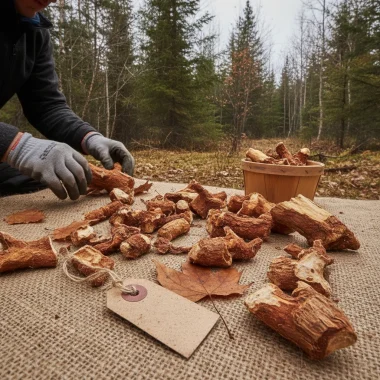
Établir le origine vérifiée La traçabilité de l'écorce de racine d'iboga est essentielle pour garantir son authenticité et sa provenance éthique. Les chercheurs doivent exiger des fournisseurs une documentation complète attestant d'une récolte légale et durable de la plante. Ceci inclut le respect des réglementations forestières locales et, le cas échéant, des accords internationaux tels que la Convention sur le commerce international des espèces de faune et de flore sauvages menacées d'extinction (CITES), qui encadre le commerce des espèces menacées afin de prévenir leur surexploitation. Un fournisseur réputé fournira des preuves de ses pratiques, comme les permis, les coordonnées GPS des sites de récolte et des informations détaillées sur ses méthodes de collecte. Ne pas vérifier l'origine des produits peut, involontairement, favoriser le braconnage ou le commerce de produits falsifiés, compromettant ainsi l'intégrité de la recherche et des efforts de conservation.
Soutien aux communautés autochtones et à la préservation des écosystèmes
Au-delà des préoccupations environnementales, l'approvisionnement éthique en écorce de racine d'iboga implique un engagement direct et un soutien envers les producteurs locaux. communautés autochtones qui cultivent et utilisent traditionnellement la plante. De nombreuses communautés d'Afrique centrale possèdent un savoir traditionnel profond concernant la culture, la récolte et la signification spirituelle de l'iboga. Une chaîne d'approvisionnement véritablement durable repose sur des pratiques de commerce équitable, garantissant qu'une partie des bénéfices revienne à ces communautés, leur apportant des avantages économiques et les incitant à une gestion durable des terres. Cela pourrait inclure le soutien à des projets de culture locaux qui réduisent la pression sur les populations sauvages ou le financement d'initiatives de conservation menées par les communautés. Des organismes de recherche canadiens, dans le cadre de leurs recherches sur la commercialisation du chlorhydrate d'ibogaïne, s'y emploient. à des fins de recherche légitimes.
Demande d'analyses par un laboratoire tiers et de certificats d'authenticité (CoA)
La pierre angulaire d'un approvisionnement fiable en chlorhydrate d'ibogaïne est la fourniture constante de analyse en laboratoire par un tiers Un certificat d'authenticité (CoA) complet doit être fourni pour chaque lot. Ce document doit détailler la pureté et la concentration du composé, ainsi que l'absence de contaminants tels que les métaux lourds, les solvants résiduels, les pesticides et les impuretés microbiennes. Les méthodes analytiques comme la chromatographie liquide à haute performance (HPLC) et la chromatographie en phase gazeuse couplée à la spectrométrie de masse (GC-MS) sont les normes de l'industrie pour vérifier la composition chimique et la pureté. Les chercheurs doivent examiner attentivement les CoA afin de s'assurer qu'ils sont récents, spécifiques au lot acheté et délivrés par des laboratoires indépendants accrédités ISO/IEC 17025. L'absence d'une telle documentation détaillée ou le recours exclusif à des tests internes peuvent constituer un signal d'alarme important, susceptible d'entraîner des résultats de recherche inexacts ou des risques pour la sécurité.
Évaluation de la transparence, de l'expertise et des protocoles de conformité des fournisseurs
Un fournisseur réputé pour
Processus d’approvisionnement : garantir l’acquisition sécurisée et conforme de chlorhydrate d’ibogaïne à des fins de recherche
L’acquisition d’ibogaïne HCL à des fins de recherche scientifique au Canada exige une grande rigueur, le respect des directives réglementaires et des mesures de sécurité strictes. L’ibogaïne HCL étant inscrite sur la Liste des médicaments d’ordonnance de Santé Canada, son approvisionnement doit se conformer aux cadres établis pour les composés de recherche, garantissant ainsi la conformité et l’intégrité de la chaîne d’approvisionnement. Cette approche structurée permet de prévenir le détournement, de maintenir la stabilité du composé et de soutenir la recherche scientifique.
Meilleures pratiques en matière de communication avec les fournisseurs et de passation de commandes
Un approvisionnement efficace commence par communication claire et complète avec le fournisseur. Les établissements de recherche doivent clairement indiquer qu'ils utiliseront l'ibogaïne HCL exclusivement à des fins de recherche scientifique et confirmer leur conformité à la réglementation de Santé Canada. Avant de passer commande, il est conseillé de conclure des accords formels avec le fournisseur choisi, précisant les spécifications du produit, les protocoles d'assurance qualité, les délais de livraison et les mécanismes de règlement des différends. S'assurer dès le départ que le fournisseur est en mesure de fournir les numéros de lot précis, les certificats d'analyse détaillés et les fiches de données de sécurité (FDS) permet d'éviter tout problème ultérieur. L'Organisation mondiale de la santé Elle publie régulièrement des lignes directrices relatives à la chaîne d'approvisionnement des produits pharmaceutiques, qui peuvent éclairer les bonnes pratiques dans ce domaine. Les chercheurs doivent également s'assurer que leurs autorisations et permis institutionnels internes sont en règle avant tout achat, notamment en ce qui concerne les substances contrôlées ou réglementées.
Logistique, emballage et documentation sécurisés pour les composés de recherche
Le transfert physique de l'ibogaïne HCL de qualité recherche nécessite des techniques spécialisées. logistique et emballage sécurisés. Les composés doivent être expédiés dans des contenants inviolables et appropriés, protégeant de la lumière, de l'humidité et des variations de température afin de préserver leur stabilité chimique. Un emballage extérieur discret est également essentiel pour prévenir tout accès non autorisé ou vol durant le transport. De manière cruciale, chaque envoi doit être accompagné d'une documentation complète, incluant les listes de colisage détaillées, les certificats d'analyse, les fiches de données de sécurité et tous les permis ou déclarations d'importation/exportation requis par les douanes canadiennes et Santé Canada. Une chaîne de traçabilité complète et précise, depuis l'établissement du fournisseur jusqu'au laboratoire de recherche, est indispensable pour démontrer la conformité réglementaire et assurer la traçabilité tout au long du processus d'acquisition, minimisant ainsi les risques liés au transport et à la manutention.
Protocoles de laboratoire : Manipulation, stockage et intégrité des données en toute sécurité pour le chlorhydrate d’ibogaïne
Une fois l'ibogaïne HCL obtenue et réceptionnée par un établissement de recherche canadien, des protocoles de laboratoire rigoureux sont essentiels pour garantir sa manipulation sécuritaire, son stockage optimal et la préservation de l'intégrité des données. En tant que composé de recherche puissant soumis à des réglementations spécifiques, toute pratique négligente peut compromettre les résultats expérimentaux, présenter des risques pour la sécurité du personnel et entraîner le non-respect des directives institutionnelles et gouvernementales. L'établissement de procédures claires et documentées est primordial pour tout laboratoire travaillant avec l'ibogaïne HCL.
Consignes essentielles de sécurité et de gestion des déchets pour les environnements de recherche
L’utilisation de l’ibogaïne HCL dans un contexte de recherche exige le strict respect des règles suivantes : consignes de sécurité essentielles Afin de protéger le personnel de laboratoire, le port d'équipements de protection individuelle (EPI) est obligatoire. Ces équipements comprennent des gants, des blouses et des lunettes de protection pour prévenir tout contact cutané ou ingestion accidentelle. La manipulation des produits doit idéalement se faire dans un endroit bien ventilé, comme une hotte chimique, afin de limiter les risques d'inhalation. Les protocoles d'urgence en cas de déversement ou d'exposition accidentelle doivent être clairement affichés et régulièrement mis en pratique. De plus, des mesures robustes doivent être mises en place. gestion des déchets Les protocoles sont indispensables. Tous les déchets d'ibogaïne HCL, y compris les solutions périmées, la verrerie contaminée et les EPI usagés, doivent être collectés, stockés et éliminés comme déchets dangereux conformément aux réglementations locales, provinciales et fédérales. Cela garantit la protection de l'environnement et empêche l'accès non autorisé aux composés résiduels. sécurité de la recherche enthéogène Des directives doivent être intégrées à toutes les opérations de laboratoire impliquant de telles substances puissantes.
Critères essentiels pour choisir un fournisseur réputé d'ibogaïne HCL au Canada
Choisir un fournisseur réputé d'ibogaïne HCL est une première étape cruciale pour tout établissement de recherche canadien souhaitant mener des études avec cette substance contrôlée. L'intégrité des résultats de recherche, la sécurité du personnel et le respect des cadres réglementaires rigoureux dépendent de la fiabilité et des pratiques éthiques du fournisseur choisi. Un fournisseur inadéquat peut entraîner des retards, des problèmes de conformité et compromettre la validité scientifique des expériences. Par conséquent, un processus de sélection rigoureux est essentiel pour garantir que le matériel acquis réponde à toutes les normes et exigences légales en vigueur.
Assurance qualité et vérification de la pureté
Un critère primordial pour la sélection des fournisseurs est leur engagement indéfectible envers assurance qualité et vérification de la pureté. Les fournisseurs réputés fournissent des certificats d'analyse (CoA) complets pour chaque lot d'ibogaïne HCL, détaillant sa pureté, son identification et l'absence de contaminants. Idéalement, ces CoA devraient être établis par des laboratoires tiers indépendants et accrédités ISO. Les chercheurs doivent vérifier les niveaux de pureté indiqués, en visant généralement 98% ou plus, et les comparer à leurs besoins expérimentaux spécifiques. Les fournisseurs qui proposent facilement des échantillons ou permettent des contrôles qualité avant achat font preuve de transparence et de confiance dans leur produit, ce qui est essentiel lors de l'acquisition d'un composé de recherche sensible. Les informations relatives à la méthode de synthèse et aux résidus de solvants doivent également être facilement accessibles afin de garantir la meilleure qualité possible pour la recherche préclinique et clinique.
Conformité réglementaire et octroi de licences
S'assurer que le fournisseur respecte scrupuleusement les conformité réglementaire et licences appropriées L'utilisation de l'ibogaïne HCL est une condition essentielle pour la recherche au Canada. Tout fournisseur d'ibogaïne HCL doit se conformer pleinement à la réglementation de Santé Canada concernant les substances contrôlées, ainsi qu'à toutes les lois fédérales et provinciales applicables régissant la vente et la distribution de composés pharmaceutiques. Cela inclut la possession des licences de distributeur et des permis d'importation/exportation nécessaires, ainsi qu'une connaissance approfondie de la Loi réglementant certaines drogues et autres substances (LRCDS) et de ses règlements d'application. Les chercheurs doivent exiger la preuve de ces licences et se renseigner sur les protocoles du fournisseur concernant la manipulation et l'expédition de substances contrôlées au Canada. Les antécédents d'un fournisseur auprès des organismes de réglementation canadiens ou son expérience dans la facilitation de transactions sécurisées et légales pour d'autres produits chimiques de recherche contrôlés constituent un indicateur fiable de sa fiabilité et de son engagement envers la légalité. De plus, une communication transparente concernant la documentation requise pour les procédures douanières et d'importation de Santé Canada est la marque d'un fournisseur réputé et expérimenté.
Transparence, documentation et assistance
Au-delà de la qualité du produit et du respect des réglementations, un fournisseur réputé d'ibogaïne HCL doit faire preuve d'un comportement exemplaire. transparence, documentation complète et assistance client robuste. Cela inclut une chaîne d'approvisionnement claire et traçable, de la matière première au produit purifié final. Les numéros de lot, les dates de fabrication et les dates de péremption doivent être clairement indiqués et correspondre à la documentation fournie. Les fournisseurs doivent répondre rapidement aux demandes de renseignements, en fournissant un soutien technique détaillé et des conseils sur les spécifications des produits, les conditions de stockage et les fiches de données de sécurité (FDS). La capacité de fournir systématiquement et sans erreur les documents d'expédition, les déclarations en douane et tout autre document requis est essentielle au bon déroulement des transactions internationales et au respect de la réglementation au Canada. L'engagement d'un fournisseur envers une communication continue et la résolution de problèmes, notamment face à la complexité de l'acquisition de substances contrôlées, témoigne de son professionnalisme et de sa fiabilité en tant que partenaire à long terme pour les projets de recherche.
Exigences légales et clause de non-responsabilité essentielles pour les achats de produits ethnobotaniques et de recherche au Canada
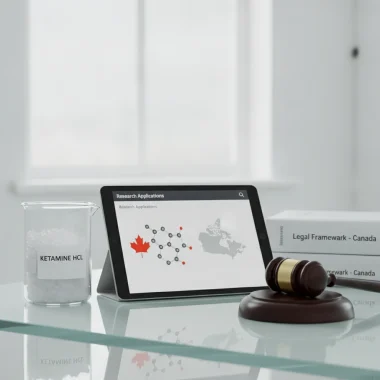
Il est primordial pour tous les acheteurs de bien comprendre le paysage juridique complexe qui entoure les composés ethnobotaniques et de recherche au Canada. Loi réglementant certaines drogues et autres substances (LRCD) Le respect de la réglementation spécifique de Santé Canada n'est pas seulement conseillé, mais constitue une condition préalable obligatoire à toute acquisition. Bien que l'ibogaïne ne soit pas inscrite à la Loi réglementant certaines drogues et autres substances (LRCDS), Santé Canada l'a placée sur la Liste des médicaments d'ordonnance, ce qui signifie que sa vente, son importation et son utilisation sont strictement réglementées et nécessitent souvent des autorisations d'accès ou de recherche spéciales. Cette subtilité réglementaire implique que les entités qui s'approvisionnent en ibogaïne doivent respecter certaines règles.
D'autres composés proposés, comme la psilocybine, le DMT et la mescaline pure, sont classés comme substances de l'annexe III en vertu de la Loi réglementant certaines drogues et autres substances (LRCDS), tandis que la kétamine figure à l'annexe I. Ceci exige un respect extrêmement strict de la réglementation, et ce, uniquement à des fins de recherche, ce qui nécessite souvent des autorisations spécifiques de Santé Canada. Un écueil important pour les chercheurs et les collectionneurs est la mauvaise interprétation de cette réglementation, pouvant entraîner des complications juridiques. Afin de garantir un approvisionnement canadien en ibogaïne conforme à la réglementation, il est essentiel de se renseigner auprès des autorités compétentes. chaîne.
Produits strictement destinés à des fins ethnobotaniques, de recherche, de souvenir ou d'ornementation
Nos produits sont explicitement destinés à des usages spécifiques et non consommables, soulignant notre engagement envers un commerce légal et éthique. Le terme “ ethnobotanique ” désigne l'étude scientifique des usages traditionnels des plantes par différentes cultures, en mettant l'accent sur leur importance historique, culturelle et botanique. Par exemple, l'acquisition
De plus, les produits peuvent être classés comme “ souvenirs ” ou “ objets décoratifs ”, comme par exemple des spécimens botaniques uniques collectés pour leur attrait esthétique ou faisant partie d'une collection de plantes rares. La poudre de 5-MeO-DMT en est un exemple. Ce produit est vendu à des fins d'analyse scientifique et d'étude ethnobotanique de sa structure chimique, et non pour un usage personnel. Les acheteurs doivent impérativement respecter ces finalités afin de garantir Conformité légale et une conduite éthique.
Les mesures concrètes que les utilisateurs peuvent prendre consistent notamment à documenter méticuleusement l'utilisation prévue de tout matériel acquis, en veillant à ce qu'elle corresponde précisément aux définitions de non-consommation fournies. Cela peut impliquer la formalisation de protocoles de recherche, la tenue de registres de collection détaillés ou simplement l'appréciation des articles comme objets d'exposition botanique. Par exemple, les personnes qui achètent sur le site Web du gouvernement du Canada, Il est essentiel de consulter, avant tout achat, les sections relatives aux tableaux de pharmacopée de Santé Canada et à la Loi réglementant certaines drogues et autres substances. Se fier uniquement à des renseignements généraux ou à des sources obsolètes constitue un écueil important pouvant entraîner des répercussions juridiques imprévues et compromettre l'intégrité des projets de recherche.
Il est impératif que les utilisateurs, notamment les chercheurs et les collecteurs ethnobotaniques, comprennent que la législation peut varier considérablement d'une juridiction à l'autre. Par exemple, si certaines substances sont réglementées au niveau fédéral, certaines autorités sanitaires provinciales peuvent imposer des restrictions supplémentaires ou exiger des permis spécifiques pour leur possession ou leur utilisation, même dans le cadre de recherches légitimes. Par conséquent, les personnes ou les institutions qui envisagent l'acquisition de composés tels que les enthéogènes doivent veiller à leur sécurité dans le cadre de la recherche. et procéder à des évaluations juridiques complètes, adaptées à leur emplacement précis et à l'usage prévu, avant de donner suite à toute commande. Cette approche rigoureuse contribue à atténuer les risques, à protéger le chercheur et l'établissement, et à garantir que toutes les activités respectent les normes les plus élevées en matière de légalité et d'éthique au Canada.
En privilégiant le respect rigoureux des lois, en comprenant les désignations des produits et en faisant preuve de diligence raisonnable personnelle, les chercheurs canadiens et les passionnés d'ethnobotanique peuvent acquérir ces composés uniques de manière responsable et éthique dans le cadre réglementaire en constante évolution.



 English
 English (Canada)
 Français du Canada
 Español de México
 Türkçe